
半張臉

2020年2月1日開始全新職位。

replace我的同事要2月14日才加入。於是,這頭半個月都要wear two hats,一個人打兩份工,忙得不可開交。

  • 新職位包括與15位前線同事合作,這是我首次帶領制服團體的機會。雖然我有這15人的照片,可惜最近大家都是戴口罩,我只能記住各位的「上半邊臉」、髮型與眼鏡。
  • 幸好新部門的下屬非常醒目,感覺是她在reverse educate我一樣。要提醒自己,每一個新職位(這次更是全新工種!)必定會比較bumpy,需要極快上軌道。
  • 原部門的tasks還是100%進行中,一個人做兩個人的事。更何況現在零售市場都在「吊鹽水」呢?唯有再深一步去delegate。
  • 「買到口罩」變了「新年快樂」、「身體健康」後的祝福語。 有點苦,但充滿2020年的時代特色。
  • Face ID 在口罩時代作廢。
  • 口罩變了稀品,不小心掉了在地下,心如刀割!
  • 這病毒,一人中招,全家受害。好可怕的特徵。
  • 最近的split team上班模式其實有點累。。
  • 感激b送我上班。
  • 今早發作,本來想放棄上班。多謝b鼓勵我要儘快恢復狀態上班去。好辛苦,但做到了。
繼續大談口罩

  • 要藥房不漲價,要求商戶一起擔當社會責任,完全是天方夜譚。Price Gouging (即「趁火打劫」), no matter how morally unjust, 其實是正常不過的現象。正因為商戶必定趁火打劫,我們才需要政府的regulations呀。政府有做到嗎?有獎有罰有執法嗎?零。
  • 大家都似乎習慣了拍照時口罩下的笑容了。戴了口罩,不用刮鬍子不用塗唇膏也不用展露笑容,多好。
  • 人根深蒂固的本性根本無法一瞬間進步,所以我們也不用執著/奢求人性會突然變好。既然這樣,我們才需要用外在的systems去控制人流。我們有做到嗎?沒有。

唉

唉。

:( 可唔可以辭職?

唔想再返工了。

Bring my flowers now, while I’m livin’
I won’t need your love when I’m gone
Don’t spend time, tears, or money on my old breathless body
If your heart is in them flowers, bring ’em on

Emile

Jean-Jacques Rousseau summed it all up in his novel Emile, the eighteenth-century bible of feeling. Rousseau held that when looking for the rules of conduct in life, he found them ‘in the depths of my heart, traced by nature in characters which nothing can efface. I need only consult myself with regard to what I wish to do; what I feel to be good is good, what I feel to be bad is bad.’


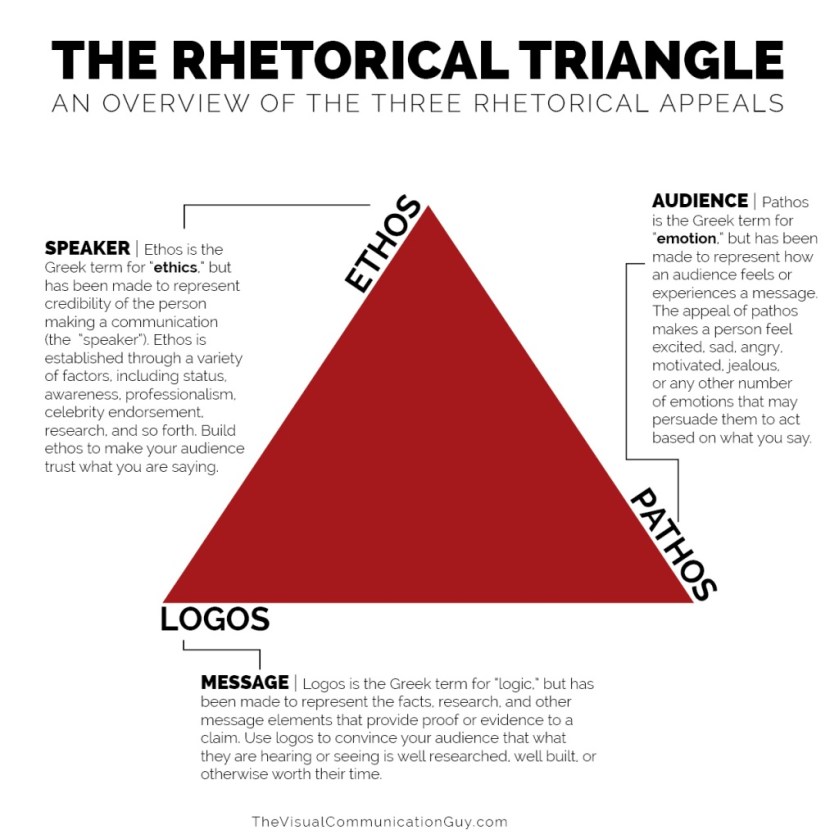
Elements of Rhetoric

The-Rhetorical-Triangle-1024x1024

唔小心食咗令人精神嘅藥,訓唔到覺。
唯有做下d又悶但yet productive嘅事,催眠下自己(但暫時未成功)。

話說之前係edX register咗 “Rhetoric: The Art of Persuasive Writing and Public Speaking“,當然click咗就冇再follow up(因為入面嘅examples都係全部american politics有關的,例如I have a Dream and other Presidential Rhetorics 但想睇闊d)。睇返chapter one,其實好多都係以前Form 1-3 Eng Lit又讀過嘅嘢。introduction嘅重點:

Rhetoric 

  • Aristotle named three types of appeals (methods to persuade others) – Logos (by logic), Ethos (by expertise), Pathos (by emotions)  
  • Common Arrangement of a Rhetoric – (1) exordium, the introduction; (2) narratio, the statement of the context or situation; (3) confirmatio, the presentation of arguments and facts; (4) refutatio, the presentation and refuting of counterarguments; (e.g. some may say) and (5) peroratio, the conclusion.
  • Style can be controlled by diction (choice of words – too technical/flowery?), syntax/pattern of sounds (word orders – alliteration, assonance, sibilance), schemes (parallelism/repetition/omission), and tropes (Twist of meanings such as metaphors, allusion [reference to other works] or puns).

Oratory 演講

  • When you are writing a speech, you should bear in mind that your audience will only have one chance to understand any one thing you say. They can’t stop and replay what you just said. As a result, you will have to work to make sure that you bring them along with you. It is critical for your speech to have a clearly articulated argument that you refer back to often to keep it fresh in your hearers’ minds. Your speech should also have a clear structure, with “signal phrases” that let your audience know when you are moving from one idea to the next.
  • Division –  e.g. “”I want to talk to you today about three places where we begin to build the Great Society:..the second place..the third place…”
  • Style – repetition, parellellism, anaphora
  • The Sound Byte  – short, punchy sentences that sum up your points.

Public Speaking Tips 

  • 1) Find out more about your venue – big? small? who? mics? how to turn them on and off?
  • 2) Presence – stand tall and breath low. warm-up by favorite song.
  • Eye Contact – look at several people, don’t forget people at the back.
  • Practice – practice the several important words first in the sentence, underline them in the text  – emphasize on the words!
  • Shift your standing position when there is a change of subject
  • Beware of pace, tend to speed up. take small pauses between sentences. take a breath / sip of water.
  • Articulate, be clear of each word.
  • Any sentence that is difficult to say, re-write it.